Rubber Tyred Gantry (RTG) cranes are among the most widely used container-handling machines in modern ports, inland container depots, and intermodal yards. Their popularity comes from a balance of high lifting capacity, flexible mobility, and efficient yard utilization. However, to select the right RTG crane for a project, it is essential to understand standard RTG crane specifications and how each parameter influences performance, safety, and operating cost.
This article provides a comprehensive explanation of standard Rubber Tyred Gantry Crane specifications, helping port operators, engineers, and procurement teams make informed technical decisions.
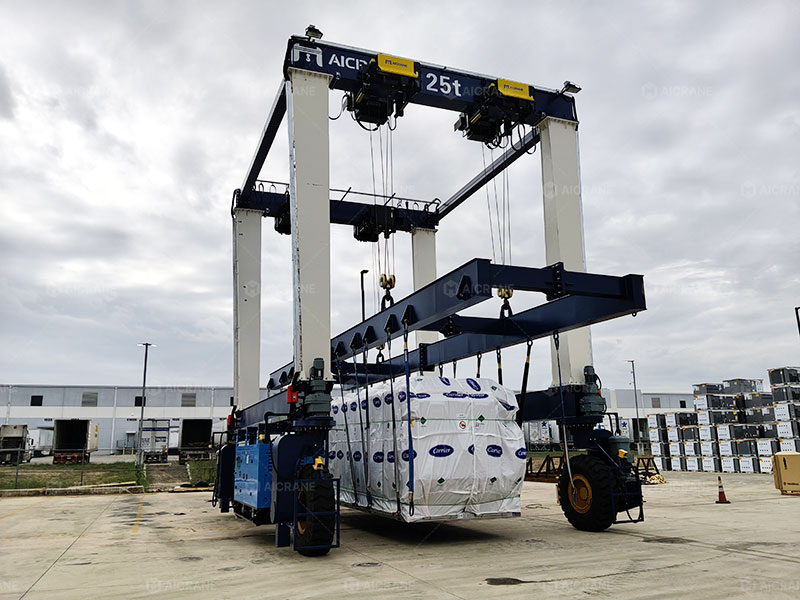
1. What Are Standard RTG Crane Specifications?
Standard RTG crane specifications define the mechanical, structural, electrical, and operational parameters that determine how the crane performs in container handling applications. These specifications are typically developed in accordance with international standards such as ISO, FEM, and port authority requirements.
Unlike customized cranes designed for special projects, standard RTG cranes follow widely accepted configuration ranges that suit most container yard operations. Understanding these standard values helps users compare suppliers objectively and evaluate long-term operational suitability.
2. Rated Lifting Capacity
The rated lifting capacity is one of the most fundamental RTG crane specifications. Most standard RTG cranes are designed to handle:
-
30–35 tons: Typically for single 20-foot containers
-
40–41 tons: Standard for loaded 40-foot containers
-
50+ tons: For heavy containers, twin-lift, or special handling
The rated capacity is calculated under specific conditions, including hoisting height, wind speed, and load distribution through the spreader. It is important to note that lifting capacity at the spreader differs from structural design capacity, which includes additional safety margins.
3. Span and Container Stacking Configuration
-
Over 5+1 rows (five container rows plus one truck lane)
-
Over 6+1 rows (common in high-density yards)
-
Over 7+1 or 8+1 rows (for large terminals)
Span directly impacts steel structure size, wheel loads, and steering complexity. A wider span increases stacking density but also raises crane weight and pavement requirements.
4. Lifting Height and Stacking Height
Lifting height specifications define how many containers can be stacked vertically. Standard RTG cranes usually support:
-
1-over-3 container stacking
-
1-over-4 container stacking
-
1-over-5 container stacking (for high-capacity terminals)
The lifting height is measured from the ground to the container spreader under maximum hoist position. Increased stacking height requires stronger gantry structures, higher hoist drum capacity, and enhanced sway control systems.
5. Hoisting, Trolley, and Gantry Travel Speeds
RTG crane productivity is strongly influenced by motion speeds, which are key technical specifications.
Hoisting Speed
-
Typically 18–30 m/min (loaded)
-
Faster speeds may apply under light-load conditions
Trolley Travel Speed
-
Commonly 70–90 m/min
-
Affects container positioning efficiency
Gantry Travel Speed
-
Usually 90–130 m/min
-
Some RTGs support higher speeds for long-distance yard movement
Speed specifications must be balanced with anti-sway performance and braking capability to maintain safety.
6. Tyre and Wheel Specifications
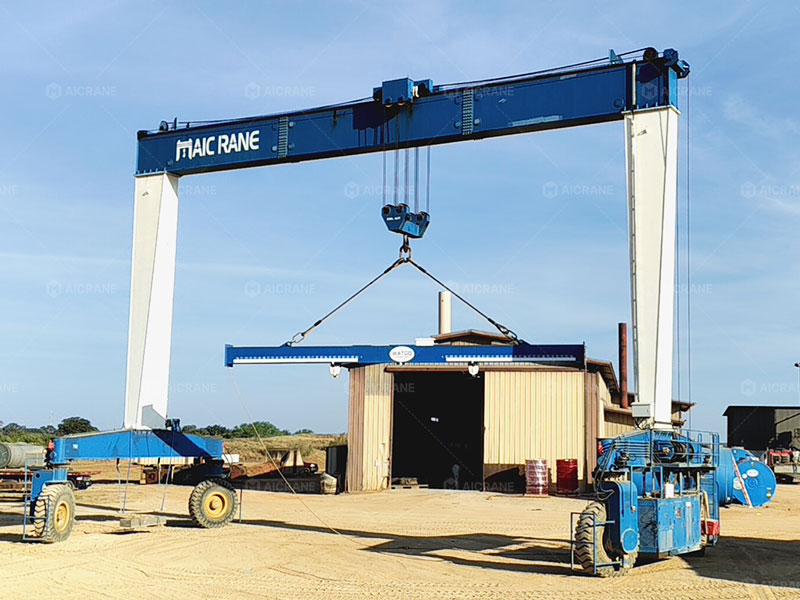
RTG cranes rely on rubber tyres instead of rails, making tyre specifications critical.
Standard RTG mobile gantry crane for sale typically features:
-
8 tyres or 16 tyres, depending on capacity and span
-
Heavy-duty pneumatic or solid rubber tyres
-
High load-bearing ratings for uneven pavement
Tyre configuration affects ground pressure, turning radius, and pavement design. Ground bearing pressure is often specified to ensure compatibility with concrete or asphalt yard surfaces.
7. Steering System Specifications
RTG cranes are known for advanced steering capabilities that allow precise yard movement. Standard steering modes include:
-
2-wheel steering for straight-line travel
-
4-wheel steering for improved maneuverability
-
8-wheel steering for tight turning radii
-
Crab steering for lateral movement
The steering system specification directly influences yard layout flexibility and operational efficiency.
8. Power Supply and Energy System Specifications
RTG cranes are available in multiple power configurations:
Diesel-Electric RTG
-
Onboard diesel generator
-
Widely used in traditional terminals
Hybrid RTG
-
Diesel generator + battery or supercapacitor
-
Reduced fuel consumption and emissions
Fully Electric RTG
-
Cable reel or busbar power supply
-
Zero local emissions
Standard specifications include generator capacity, voltage levels, and energy recovery systems such as regenerative braking.
9. Spreader Specifications
The spreader is a critical interface between the gantry crane and containers.
Standard RTG spreader specifications include:
-
Telescopic spreaders for 20ft, 40ft, and 45ft containers
-
Twin-lift spreaders (optional)
-
Anti-skew and anti-sway functions
-
ISO-compliant twistlock systems
Spreader weight and automation level are important considerations when evaluating lifting performance.
10. Control System and Automation Level
RTG cranes can operate under different control modes:
-
Cabin control (operator seated in crane cabin)
-
Remote control (operator at ground station)
-
Semi-automatic operation
-
Fully automated RTG (ARTG)
Standard specifications define PLC architecture, sensor systems, communication protocols, and redundancy levels to ensure reliable operation.
11. Safety and Protection Specifications
Safety specifications are mandatory components of standard RTG crane design and typically include:
-
Overload protection and load monitoring
-
Emergency stop systems
-
Wind speed alarms and storm locking devices
-
Anti-collision systems
-
Travel limit switches
Wind resistance is a particularly important specification, with defined maximum operating wind speeds and parking wind resistance values.
12. Environmental and Climatic Specifications
RTG cranes are designed to operate in diverse environments. Standard environmental specifications cover:
-
Operating temperature ranges (often from -20°C to +45°C, extendable)
-
Corrosion protection levels (paint systems, C5 marine-grade coatings)
-
Dust, humidity, and salt mist resistance
These specifications directly affect service life and maintenance costs.
13. Structural Design and Duty Classification
RTG cranes are designed according to duty cycles that define expected workload intensity. Standard classifications ensure the structure can withstand:
-
Frequent lifting cycles
-
Long daily operating hours
-
Dynamic loads from travel and braking
Structural specifications also define allowable deflection, fatigue life, and welding standards.
14. Why Understanding Standard RTG Specifications Matters
A clear understanding of standard RTG crane specifications helps users:
-
Compare suppliers on a technical basis
-
Avoid over- or under-specifying equipment
-
Optimize yard layout and pavement design
-
Improve long-term reliability and operating efficiency
For port operators and terminal developers, specification knowledge translates directly into lower lifecycle cost and higher throughput.
Conclusion
Standard Rubber Tyred Gantry Crane specifications form the technical foundation of efficient container yard operations. From lifting capacity and span to steering systems, power supply, and safety features, each specification plays a critical role in determining crane performance and suitability.
By thoroughly understanding these standard parameters, decision-makers can select RTG cranes that align with operational demands, environmental conditions, and future expansion plans – ensuring reliable, safe, and productive container handling for years to come.