The self-loading concrete mixer has emerged as a cornerstone of mechanized construction across South Africa, offering contractors an integrated solution for material handling, batching, mixing, and transport. Among the prominent suppliers in this segment, AIMIX has established a significant market presence, offering a range of configurations from entry-level 1.2m³ units to high-capacity 4.0m³ models. However, a persistent fog of ambiguity surrounds the price of self loading concrete mixer. Quotations vary wildly, online listings lack specificity, and buyers frequently discover hidden costs only after committing. This opacity is not merely inconvenient; it actively distorts procurement decisions and erodes trust. This analysis dissects the authentic price architecture of AIMIX self-loading mixers destined for the South African market, delineating the legitimate factors that determine cost and exposing the gaps where buyers are most vulnerable to overpayment or under-specification.
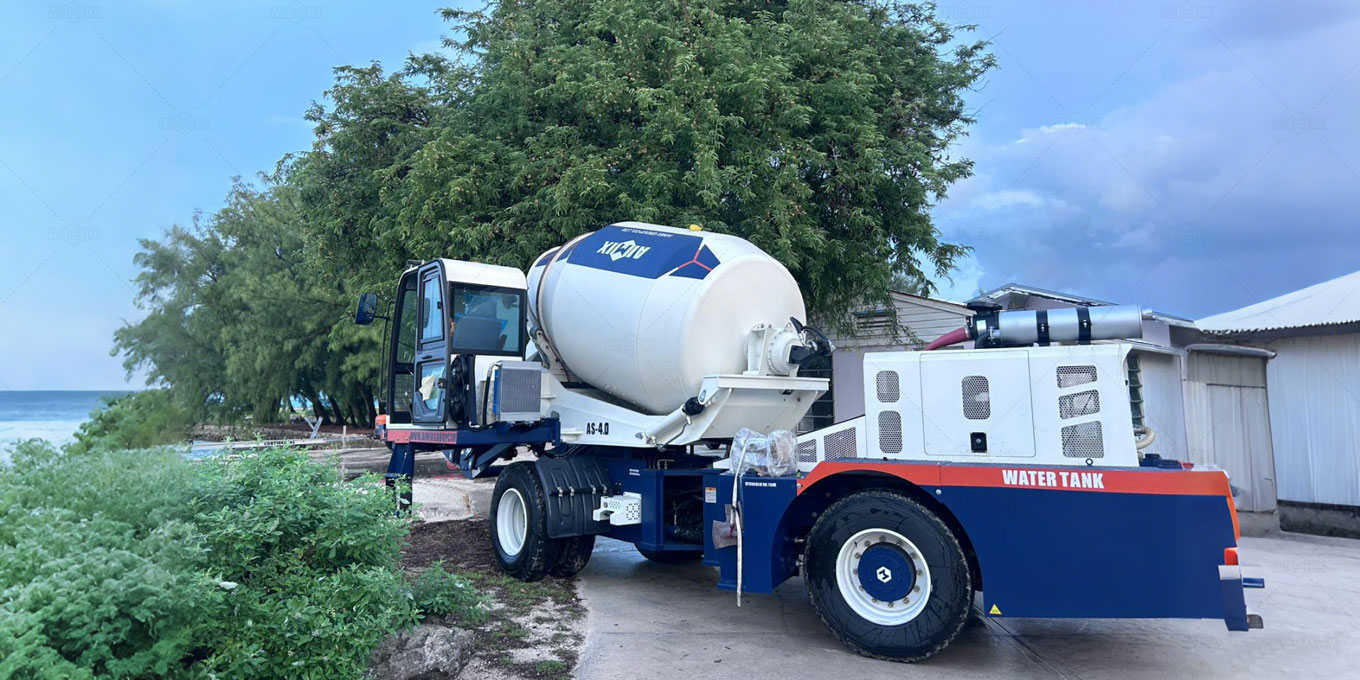
The Price Determinants: Deconstructing the AIMIX Quotation
An AIMIX self-loading mixer quotation is not a single number; it is a summation of discrete cost components, each subject to different market forces and negotiation leverage. Understanding this architecture is the prerequisite for any meaningful price analysis.
Base Machine Configuration and Volumetric Capacity
The single greatest cost driver is the machine’s core specification. AIMIX offers distinct series differentiated primarily by drum capacity and structural configuration. The entry-level 1.2m³ to 1.8m³ models, typically featuring simpler hydraulic systems and lower horsepower engines, occupy the lowest price band. The 2.6m³ to 3.5m³ mid-range represents the volume segment for most South African contractors, balancing productivity with capital cost. The flagship 4.0m³ models, equipped with heavy-duty axles, enhanced operator cabins, and often advanced weighing systems, command a substantial premium. Beyond capacity, the chassis configuration—standard two-wheel drive versus all-wheel drive—imposes a discrete cost increment of approximately 15-20%. For South African conditions, particularly in the Eastern Cape, KwaZulu-Natal, and Limpopo where terrain is frequently challenging, this upgrade is less an option than a necessity, yet buyers often discover its cost impact only at quotation stage.
Component Provenance and Optional Systems
AIMIX offers flexibility in component sourcing that directly influences self loading concrete mixer prices in South Africa. A machine specified with a premium European diesel engine—Deutz, Cummins, or Perkins—will carry a substantial premium over one fitted with a standard Chinese power unit. Similarly, the weighing and batching system can be upgraded from a basic hydraulic scale to a certified electronic load-cell system with digital readout. Hydraulic pump and motor selection also presents a tiered cost structure: domestic Chinese components, mid-tier international brands, or premium European manufacturers. Each tier carries a quantifiable price increment and, equally important, a distinct implication for reliability, fuel efficiency, and parts availability within South Africa. A quotation that does not itemize these component selections is inherently incomplete.
Logistics, Localization, and the Landed Cost Multiplier
The ex-works price—the machine at the factory gate in China—is merely the baseline. The multiplier applied to reach a delivered, commissioned price in Johannesburg, Durban, or Cape Town is substantial and variable. Ocean freight, insurance, and port handling constitute the first layer. South African import duties, VAT, and customs clearance fees add another significant increment. Inland transport from Durban harbor or other ports of entry to the buyer’s location adds further cost. Crucially, this logistical chain introduces currency exposure. Quotations denominated in US Dollars or Chinese Renminbi shift the final Rand cost with every movement of the exchange rate. An AIMIX quotation that does not clearly delineate ex-works price, freight, insurance, duties, and local delivery components prevents accurate budgeting and exposes the buyer to unpredictable final cost escalation.
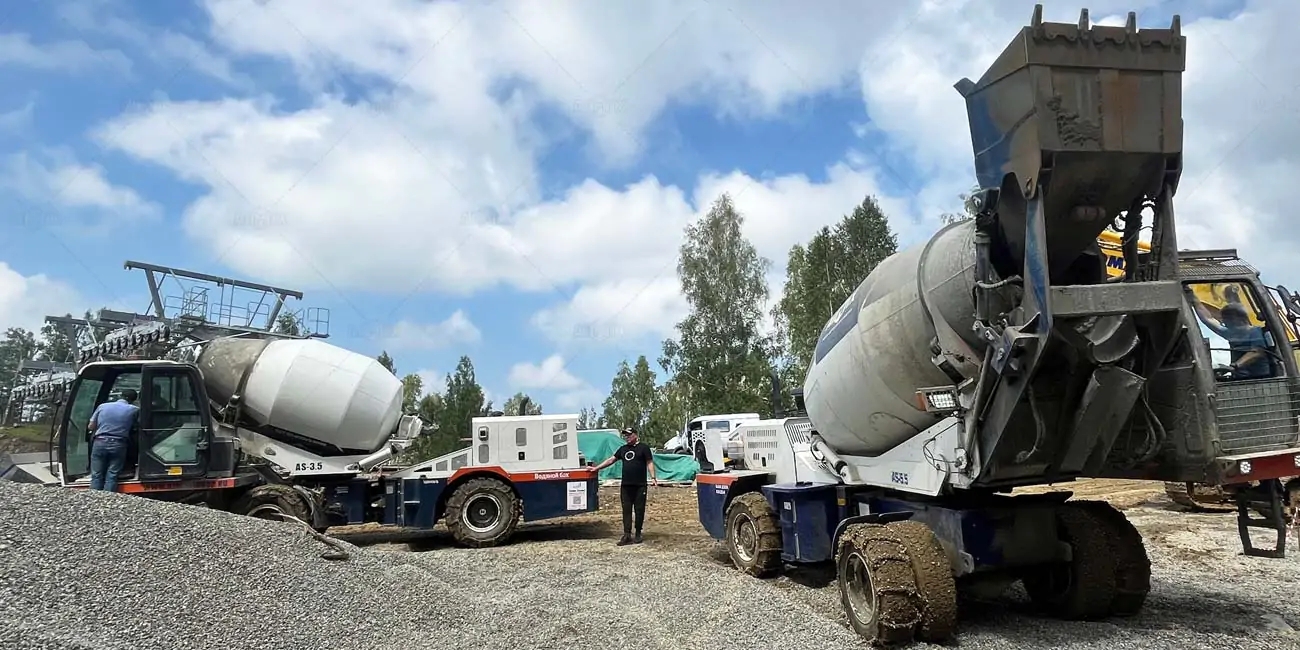
The Value Differential: AIMIX in the South African Context
Price is meaningless without context. Evaluating an AIMIX quotation requires comparison not against an abstract ideal but against the realistic alternatives available in the South African market and the specific operational demands of local construction.
Comparative Positioning: AIMIX Versus European and South African Alternatives
AIMIX occupies a deliberate position in the price-performance matrix. European self-loading mixers from manufacturers like Carmix or Metalgalante command significantly higher prices—often 2.5 to 3 times an equivalent AIMIX unit. This premium purchases established brand heritage, historically superior fit-and-finish, and, in some cases, marginally higher residual values. However, it does not necessarily purchase superior suitability for South African operating conditions. AIMIX machines have demonstrated robust adaptation to local fuel quality, operator skill profiles, and maintenance constraints. Domestic South African alternatives, primarily trailer-mounted concrete pumps or traditional drum mixers, are not functionally equivalent products. They lack the integrated loading and batching capability that defines the self-loader value proposition. Within this matrix, AIMIX pricing reflects a calculated trade-off: accessible capital entry for genuine self-loading functionality, with compromises primarily in non-critical fit-and-finish rather than core operational integrity.
Total Cost of Ownership: The Hidden Dimension of Price
The most sophisticated buyers evaluate price through the lens of Total Cost of Ownership (TCO), not initial invoice. This requires projecting costs over a five- to seven-year ownership horizon. Fuel consumption, a function of engine efficiency and machine weight, constitutes a major recurring expense. AIMIX machines, particularly those fitted with premium engine options, demonstrate competitive fuel economy. Spare parts pricing and availability is another critical TCO component. AIMIX has invested in South African parts distribution infrastructure; consumables such as mixer blades, hydraulic filters, and wear parts are increasingly accessible through local channels. This reduces the downtime risk that historically penalized Chinese equipment. Operator training and technical documentation quality also factor into TCO. AIMIX’s local dealer network has improved substantially in this regard, though consistency varies. A comprehensive TCO model, incorporating these variables, often reveals that a properly specified AIMIX machine delivers lower lifetime cost than both premium European alternatives and, counterintuitively, cheaper, poorly supported imported units.
Procurement Strategy: Securing Optimal Pricing and Value
Equipped with an understanding of price architecture and comparative value, the buyer can implement a strategic procurement approach that secures both competitive pricing and sustained operational value.
Specification Precision and Option Discipline
The most effective price negotiation begins with a rigidly defined specification. Submit to suppliers a detailed technical questionnaire covering engine make and model, hydraulic system brand, weighing system type, and tyre specification. Require itemized pricing for each major component and optional system. This eliminates ambiguity and prevents post-quote specification erosion. Simultaneously, exercise discipline in option selection. A fully climate-controlled cabin with multimedia system adds cost and complexity without contributing to concrete production. Allocate budget to enhancements that directly impact productivity and durability—all-wheel drive, reinforced drum liners, and certified weighing systems—while deferring discretionary comfort and convenience features.
Dealer Vetting and Support Infrastructure Assessment
In the South African market, the dealer is as important as the manufacturer. Conduct rigorous due diligence on the authorized AIMIX distributor. Verify parts inventory levels at their local depot. Request technician certification records. Obtain service agreement quotations with defined response times. Contact existing clients for references on warranty fulfillment and breakdown response. A large concrete mixer price quotation from a dealer with inadequate parts stock and untrained technicians is not a bargain; it is a liability. The optimal procurement outcome is not the absolute lowest price but the lowest price from a supplier demonstrably capable of supporting the machine throughout its operational life.
The question “How much should you pay?” for an AIMIX self-loading mixer in South Africa cannot be answered with a singular figure. It depends on an informed evaluation of machine configuration, component provenance, logistical content, dealer capability, and projected lifecycle costs. The appropriate price is not the minimum number a negotiator can extract from a desperate sales representative. It is the number that reflects fair compensation for a machine correctly specified for its operating environment, sourced through a competent local partner, and priced to deliver a superior return on the capital entrusted to it. That number is discoverable—but only through the application of rigorous analytical discipline, not the passive acceptance of a headline quote.